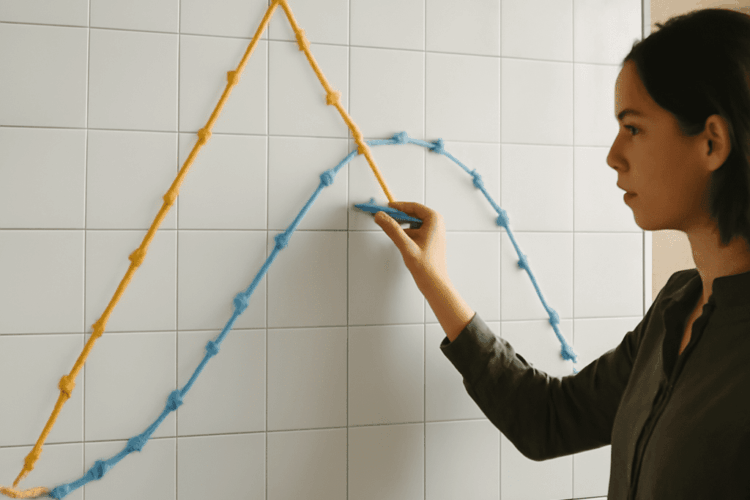
Dice rolls are at the heart of tabletop RPGs, shaping every attack, skill check, and surprise twist. Two commonly discussed mechanics are the 1d8 roll and the average of 3d6. While both serve to generate numbers for game outcomes, their probability curves and practical effects are quite different. This article breaks down what each method means, compares their averages and distributions, and offers guidance on when to use one over the other for a richer gaming experience.
What is a 1d8 roll in tabletop RPGs?
A 1d8 roll refers to rolling one eight-sided die. This is a standard mechanic in many popular roleplaying games like Dungeons & Dragons. The result of a 1d8 roll is a single number between 1 and 8, with each possible outcome equally likely. Every face of the die—numbered 1 through 8—has an equal 12.5% chance of appearing on a roll.
In gameplay, 1d8 is commonly used for weapon damage, spell effects, or random tables. For instance, a longsword might deal 1d8 damage, meaning that with each hit, the player rolls an eight-sided die to determine how much damage they inflict. This mechanic introduces variability and suspense, as players never know exactly what number will come up.
The simplicity of a 1d8 roll makes it appealing in situations where you want equal odds for every possible outcome. Whether it’s determining which item a party finds in a chest or randomly selecting a target, the 1d8 keeps things fair and unpredictable.
Because each outcome is equally likely, the 1d8 is considered a “flat” distribution. That means the average result can be easily calculated, and players can quickly grasp the risks and rewards of relying on a single roll for in-game effects.
Calculating the average of 3d6 rolls
Rolling 3d6 means rolling three six-sided dice and adding the results together. Unlike a 1d8, a 3d6 roll produces a sum between 3 (if all dice show 1) and 18 (if all dice show 6). However, the average of 3d6 is not simply the range’s midpoint—it’s determined by the math of combining three separate dice.
To calculate the average (mathematically referred to as the mean) of a 3d6 roll, you add together all the possible outcomes and divide by the total number of combinations. A single six-sided die has an average roll of 3.5 (since the numbers 1-6 average to 3.5). For three dice, multiply 3.5 by 3, giving an average of 10.5 for a 3d6 roll.
If you’re asked to find the “average of 3d6,” you’re either calculating the expected value (10.5), or you may be rolling 3d6 and then dividing the sum by three to get a result between 1 and 6. This second method is less common in most RPGs, but it’s sometimes used for specific mechanics, like determining average damage over time or smoothing random results for less swingy outcomes.
Statistically, the more dice you roll and average, the more likely you are to get a result near the middle of the possible range. This property makes the 3d6 average less random and less extreme compared to the single-roll method of 1d8.
Probability and distribution: 1d8 vs. 3d6
The key difference between a 1d8 roll and the result of 3d6 lies in their probability distributions. A 1d8 roll is uniform: every number from 1 to 8 has the same chance (12.5%). That means rolling a 1 is just as likely as rolling an 8.
In contrast, the 3d6 distribution is bell-shaped, or what mathematicians call “normal” for discrete values. The most common result is 10 or 11, with those numbers being much more likely than the extremes of 3 or 18. For example, there’s only a 0.46% chance of rolling a 3 or an 18 with 3d6, while a 10 or 11 occurs about 12.5% of the time each. This clustering around the center means that, over time, players will see fewer very low or very high numbers and more results near the average.
This difference in distribution impacts how random or predictable results feel. If you want wild swings—where anything can happen—a 1d8 roll delivers. If you want more reliable, less extreme results, 3d6 gives a sense of stability and fairness over multiple rolls.
The choice between these two affects not just the averages, but also player psychology. Some game designers prefer the bell curve of 3d6 for ability scores or other important mechanics, as it rewards consistency and reduces the impact of one lucky or unlucky roll.
When to use a 1d8 roll or 3d6 average in your game
Deciding between a 1d8 roll and the average of 3d6 depends on the experience you want to create. Use a 1d8 roll when you want pure randomness or when all outcomes should have the same likelihood. This works for weapon damage, loot tables, and situations where unpredictability keeps things exciting.
Opt for the 3d6 average—or simply rolling 3d6—when you want results to cluster around a midpoint. This method is ideal for generating character abilities, skill checks that should reward average performance, or any mechanic where consistency is more important than surprise. Many classic RPG systems use 3d6 for character stats for this reason.
Another consideration is pacing. Because 3d6 results rarely hit the lowest or highest possible numbers, this can prevent exceptionally bad (or good) events from derailing a story. It brings a sense of realism or balance, which is especially important in campaigns focused on narrative growth and character development.
Ultimately, your choice should match the tone and stakes of your game. Ask yourself: Is the thrill of a lucky (or unlucky) swing more important, or do you want players to feel that mastery and planning will pay off?
Practical examples: Impact on gameplay and decision-making
Imagine two fighters in combat. If their weapon deals 1d8 damage, one might inflict a glancing blow for 1 point on one turn, and then land a devastating 8-point strike the next. This unpredictability suits high-action, high-risk encounters where dramatic moments matter.
Now consider a skill check where a character needs to climb a wall. If the game master uses a 3d6 roll, most attempts will fall near the average (10 or 11), so player skill and modifiers play a larger role than luck. It’s much less likely a character will fail spectacularly or succeed against all odds with no preparation.
For character creation, rolling 3d6 for stats means most player characters will have abilities near the average, with true extremes being rare. This keeps parties balanced and ensures that outliers—either super high or low stats—are special events, not common occurrences. By contrast, rolling 1d8 for stats (if one were to try it) would result in far more chaotic and uneven characters.
Ultimately, both systems have their place. The 1d8 roll creates tension and surprise, while the average of 3d6 offers predictability and balance. Use each thoughtfully to tailor your game’s experience to your table’s style and story needs.