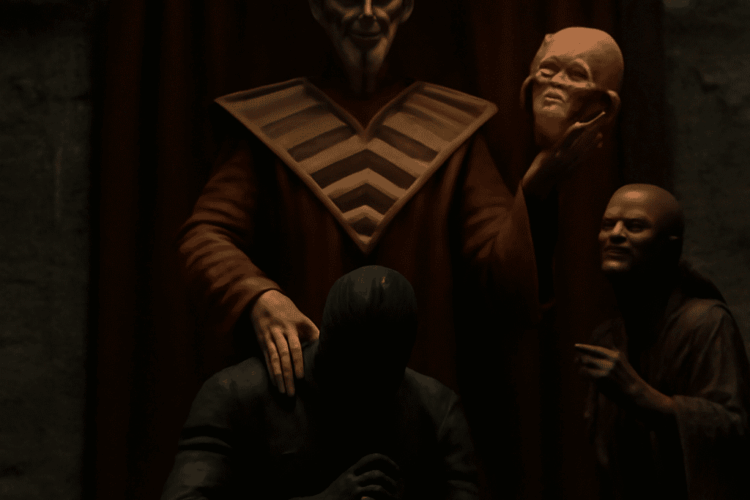
Demons in DND are iconic fiends that bring chaos, terror, and unforgettable encounters to any campaign. Their lore is rich, their abilities are fearsome, and their presence in the Abyss or the Material Plane leaves a lasting mark on players. Whether you’re a Dungeon Master preparing a thrilling session or a player eager to face dark adversaries, understanding DND demons opens up a world of storytelling and tactical possibilities.
What are demons in DND?
In Dungeons & Dragons, demons are a class of fiendish entities native to the Abyss—a sprawling, ever-changing plane of chaos and evil. Unlike devils, who embody order within evil, demons represent pure, unrestrained destruction and malice. They are born from the Abyss itself, shaped by its infinite layers and the raw, hateful essence at its core.
Demons are driven by instinctual rage and hunger for destruction. They follow no true hierarchy; their society is built on violence, tyranny, and the survival of the strongest. When summoned to the Material Plane, demons act as agents of mayhem, often beyond the control of their summoners. Their motivations range from simple slaughter to the corruption of mortal souls and the spread of chaos across worlds.
Mechanically, demons in DND are typically presented as fiends with resistance or immunity to nonmagical attacks, as well as innate spellcasting, poison, and charm resistances. Most have darkvision, and many possess unique magical abilities, making them formidable foes at almost any level of play.
Classic DND demons first appeared in early editions and have since been refined and expanded. The Monster Manual and adventure modules feature a wide array of demons, each with unique abilities and roles within the Abyssal ecosystem.
Major types of DND demons
DND demons are broadly categorized into several major types that recur throughout campaign lore. Understanding these helps Dungeon Masters choose the right creatures for their stories and challenges.
- Dretch: The weakest of demons, dretches are squat, loathsome creatures often used as cannon fodder or summoned en masse. They exude a foul stench, and while individually weak, they can overwhelm through sheer numbers.
- Quasit: These tiny, shapeshifting fiends are common as familiars for evil spellcasters. Quasits are cunning, able to go invisible or assume animal forms, and their poison stings can be deadly to the unwary.
- Vrock: Vulture-headed demons, vrocks are known for their screeching, stunning screams and the ability to release clouds of toxic spores. They combine physical brutality with the power to fly and attack from above.
- Hezrou: Large, toad-like demons, hezrous act as enforcers for greater demons. Their stench is overwhelming, and they serve as shock troops in the battles of the Abyss.
- Glabrezu: Glabrezu demons are notorious tempters. With two pincers and two humanoid hands, they can offer mortals power or wish-like abilities in exchange for souls, making them just as dangerous as manipulators as they are in combat.
- Marilith: Six-armed and serpentine, mariliths are elite warriors who command demon armies. Their combination of martial prowess and tactical intelligence makes them terrifying opponents on the battlefield.
- Balor: Among the most powerful “standard” demons, balors are wreathed in fire, wield lightning whips and swords, and explode in a fiery blast upon death. These legendary foes are often generals or lieutenants of demon lords.
Each demon type offers unique abilities, resistances, and strategies, allowing Dungeon Masters to pick challenges that match their parties’ power and narrative needs. Many demons can also summon lesser demons, compounding the danger in prolonged encounters.
Demon lords and notable demon entities
Demon lords are the most powerful beings in the Abyss, each ruling over their own layer and exerting dominion through force, terror, and cunning. These unique individuals shape the broader story of demonkind in most DND settings. Some are centuries or even millennia old, their power eclipsing nearly all mortal and monstrous rivals.
Orcus: Known as the Prince of Undeath, Orcus commands legions of undead and wields the infamous Wand of Orcus. His goals often center around spreading undeath and corrupting the boundaries between life and death.
Demogorgon: The self-proclaimed Prince of Demons, Demogorgon is a two-headed monstrosity whose power is only matched by his unpredictability and madness. His dual minds are in constant conflict, making him a force of both destruction and confusion.
Graz’zt: The Dark Prince is famed for his charisma, intelligence, and ambition. Graz’zt’s intrigues cross planes, and his seductive influence tempts mortals to betray their own kind for power.
Juiblex: The Faceless Lord is a sprawling ooze, worshipped by slimes and oozes. Juiblex seeks only to consume and dissolve all in its path, embodying pure entropy.
Zuggtmoy: As the Lady of Fungi, Zuggtmoy rules over myconids and spreads fungal corruption through her spores. Her influence is subtle, thriving in darkness and rot rather than direct confrontation.
These demon lords frequently serve as campaign-level villains. Their motivations, powers, and abyssal minions can drive entire story arcs, whether the party faces them directly or contends with their cultists and schemes. Besides the most famous lords, dozens of named demons—such as Baphomet, Fraz-Urb’luu, and Yeenoghu—offer Dungeon Masters unique hooks and challenges to weave into any campaign.
How to use demons in your DND campaign
Integrating demons into a DND campaign strengthens your story with high stakes, moral dilemmas, and memorable encounters. The most effective use of DND demons leverages their lore, abilities, and chaotic nature to provide more than just combat obstacles.
Start by matching your demons to the tone and level of your adventure. Dretches and quasits fit low-level parties or scenarios where corruption is just beginning to spread. As characters grow stronger, introduce vrocks, hezrous, and glabrezus as direct threats or as agents of a more sinister, unseen hand. Save balors and demon lords for epic confrontations when the fate of whole regions—or worlds—is at stake.
Consider the ways demons can shape your narrative beyond battle. Their arrival can signal a warped landscape, strange weather, or outbreaks of madness and despair in the local population. Demons are also excellent sources of mysterious bargains, cursed relics, and dangerous knowledge, tempting heroes to risk more than they realize. Set up indirect conflicts through cults, corrupted leaders, or environmental hazards influenced by demonic presence.
Give each demon encounter a personal angle. Perhaps a PC’s backstory ties to a specific demon, or the party must resist temptation in a trial orchestrated by Graz’zt. Use demon lords as overarching threats, allowing their influence to be felt long before an actual confrontation. By blending unique abilities with compelling motives, you ensure that your use of DND demons elevates the campaign from simple monster fights to experiences your players will remember.